
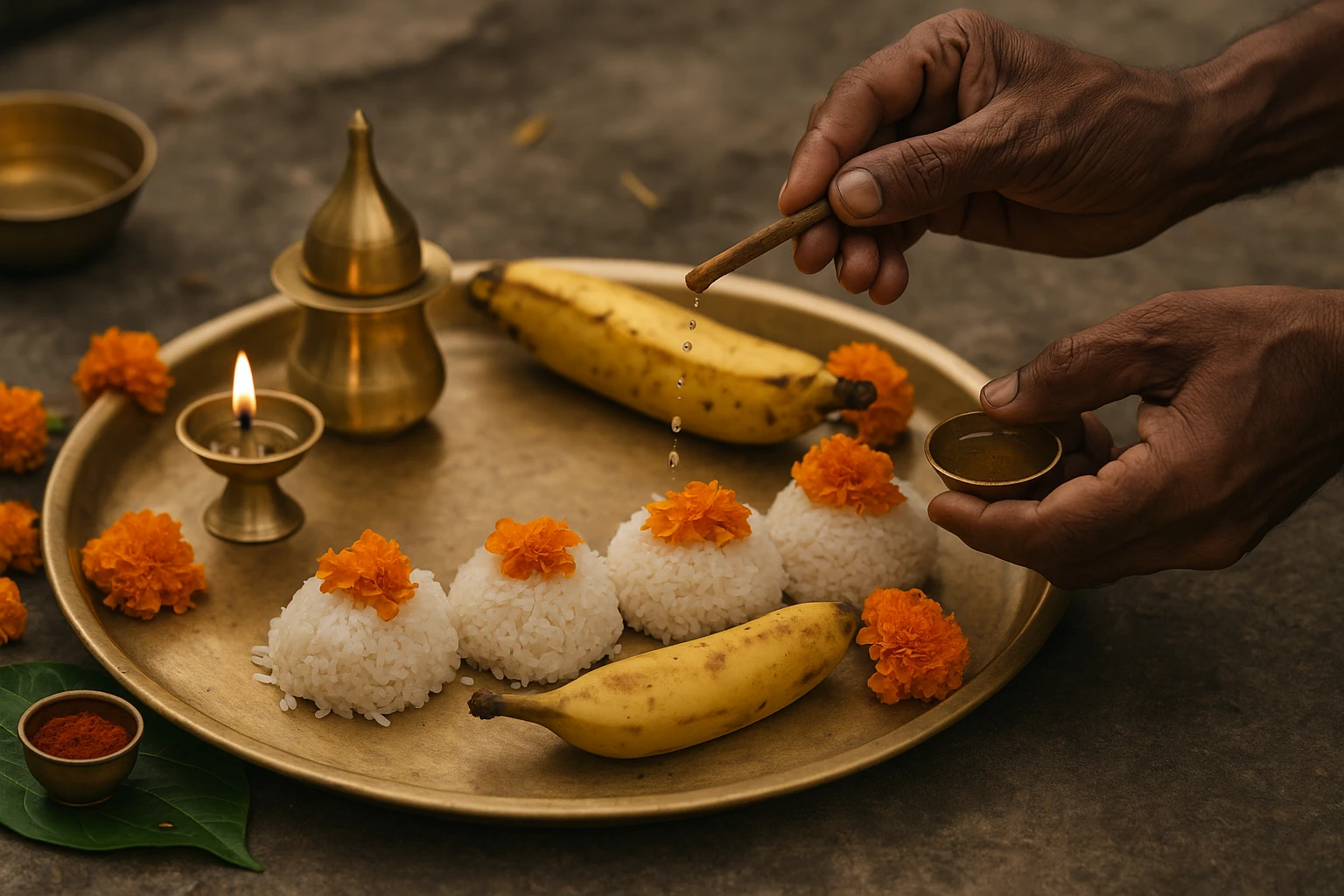
Pitru Paksha pooja is a Hindu ritual that matters since it gives respect to forebears. Families present particular ceremonies and offerings throughout this holy 16-day time since they revere the souls of dead folks and want their blessings. It is believed that the spirits of ancestors visit Earth during this time, so they are spiritually satisfied and freed through pitra pooja with food offerings.
Every year, Pitru Paksha is observed within the lunar month of Bhadrapada. In 2025, it starts
on September 7 and ends on September 21. Each year, these dates do vary slightly based on the Hindu calendar. Each Hindu household that believes in ancestral energies needs to understand the period’s spiritual and emotional depth.
The Significance of Pitru Paksha Pooja

Pitru Paksha pooja is more than just a ritual – it’s a heartfelt way of remembering and connecting with our ancestors who are no longer with us in this world. The Garuda Purana as well as the Matsya Purana are indeed Hindu scriptures. According to them, it is honoring the pitras or ancestors that ensures peace in the afterlife for ancestors and also brings prosperity, harmony, and well-being to the family.
This ritual closely connects to pitru pooja, or worship of forefathers. Pitru Paksha is a time at which performing pitra pooja is considered extremely meritorious. It is believed to remove Pitru Dosh, which can cause obstacles throughout life if ancestral energies are not at peace.
Pitru Paksha 2025: Dates, End Day, and Tithi List

If you are planning to do pitru paksha pooja in 2025, then it is important to know that this pooja by tithi. The rituals are usually carried out on the tithi of the deceased ancestor. Performing the rituals is believed to yield the same benefits as one’s personal Karma.
Significant Days during Pitru Paksha 2025:
Pratipada Shraddha (First Day): 7th September
Panchami Shraddha: September 11
Saptami Shraddha: September 13
Dashami Shraddha: September 16
Amavasya Shraddha (Sarva Pitru Amavasya): September 21
Amavasya Shraddha is the most significant day when people who don’t remember the exact date of their ancestor’s death perform the pitra pooja collectively.
Do You Know How to Perform Pitru Paksha Puja at Home
Your Home Ritual for doing Pitru Paksha Pooja at home in 2025? It is not necessary that you should go to a pilgrimage site to pay respect to the ancestors. This is an easy tutorial in a few steps to follow:
1. Selection of the Correct Tithi
Ensure the tithi (lunar day) of yours as per the date your ancestor passed away in Pitru Paksha 2025 and mark your list.
2. Perform Tarpan
At first, you have taken your morning bath, then find a quiet place and sit peacefully facing the south with a sense of love and reverence, offer a simple yet of sesame, rice, and water with barley, prepare an offering rooted in gratitude, where a quiet act of connecting with your forefathers.
3. Plan Pind Daan
Prepare soft rice balls, lightly coating them with ghee and a sprinkle of black sesame seeds.
4. Feeding Ritual for Ancestors
Prepare a sattvic lunch with kheer, rice, dal (lentils), vegetables, and puri, feed it to cows, dogs, and in particular to the crows, which are thought to be the messengers of the ancestors.
5. Donate and feed the needy
They should come and give things like clothes, food, and dakshina to the Brahmins or poor people by performing daan (donation). Meanwhile, feeding the poor is an important component of the pitra pooja. You should donate to Gurukuls, Ashrams, and Temples.
6. Keep Silence and Cleanness
During this holy period, try to maintain a calm and respectable environment where you avoid struggles, avoid non-vegetarian food, and stop the celebration.
Places to Perform Pitru Paksha Pooja
Although great numbers of families will perform pitru paksha pooja at home, there are classic pilgrimage places associated with such observances:

- Varanasi, Uttar Pradesh
- Haridwar, Uttarakhand
- Prayagraj, Uttar Pradesh
- Rameswaram, Tamil Nadu
- Gaya, Bihar
Pind Daan Significance
Pind Daan is a sacred Hindu ritual performed to honour the ancestors and help their souls to obtain peace and liberation (Moksha). It involves offering rice balls (pindas) and water for the dead souls, which usually takes place at sacred places such as Gaya or Varanasi. It is believed that the ritual removes the ancestral doshas and fulfills the duties of Pitras (grandparents).
Pind Daan has special significance during Pitru Paksha, when families lovingly remember their ancestors by performing this work with devotion, expressing gratitude and seeking blessings for prosperity and peace in the family lineage.
They have designated Pind Daan ghats in these places, and thousands of people come here during Pitru Paksha 2025 to do ancestral rituals.
Reasoning Behind Pitru Paksha According To Science & Spirituality

Although the experience of pitru paksha pooja is entirely religious, it has strong emotional and psychological significance. Recollecting and recollecting thanks to ancestors:
- Brings about a cultural sense of identity
- Promotes respect for the elderly
- Builds up family relationships
- Gives spiritual healing of the past karmas
Pitra pooja spans the gap between the present and the past generations and maintains the flow of blessings on the present and future generations.
Some of the Common Errors to be Avoided in the Pitru Paksha Pooja
- Ignoring Tithi- Never engage in rituals on the wrong lunar date.
- Cooking Non-Veg – do not use any meat, alcohol, or onion-garlic during Pitru Paksha.
- Not Giving Food to the poor- Daan is as Sacred as tarpan and pind daan.
- Showing Disrespect to Rituals- Never speak or act mockingly during the pooja or indicate a sign of boredom.
- Pooja in Impurity – When any work is fulfilled, it must be done after making the bath and wearing clean clothes.
Pitra Dosh or Astrological Connection: Is It Real?
Yes, in the Vedic astrology, pitra dosh is a concept of karmic debt that means indebtedness to ancestors through failing to carry out their duties. Individuals having pitra dosh in their birth chart have to endure:
- Marriage delay
- Financial losses
- Health problems
- Career instability
It is said that the pitru paksha pooja and pitra pooja done during this time neutralize the impacts of pitra dosh and balance the karmic element. If you are interested in knowing about how Bajra Boat Booking makes your Varanasi journey unforgettable. Read this article.
Conclusion
The Pitru Paksha pooja is a very spiritual and necessary practice and gives human the pleasure to maintain a bond with their ancestors. You can do it in your own house, or in a sacred place, such as Gaya or Varanasi, but it is all that counts: being earnest, clean, and sincere. During Pitru Paksha 2025, spend some time praising your heritage, performing pitra pooja, and letting your ancestors guide your way ahead. If you wanna know about Bengali Significance for Pitru Paksha so here is the most relevant article for you.
Frequently Asked Questions by People (FAQ)
1. What should we avoid during Pitru Paksha?
Do not eat non-vegetarian meals, alcohol, onion, and garlic during the period of Pitru Paksha. Do not arrange weddings or any new ventures, or parties. It goes without saying that no hair cutting, nails, no disrespect to senior citizens and ancestors in this holy period is allowed either.
2. When a baby is born during Pitru Paksha, is it seen as spiritually significant?
When a newborn baby is born during the Pitru Paksha, it is not believed to be inauspicious. Naming ceremonies or celebrations are, however, carried out by the families usually after the Shraddh period. The child is thought to bring blessings to the family of the ancestors, and doing pitra pooja to the family would be even more important.
3. What is the deity of Pitru Paksha?
Lord Yama is a special deity who is worshipped by people during Pitru Paksha since he is the god of death and justice. It is during this period that he is meant to bring Earth the souls of the ancestors. Others, such as offerings, are offered to Lord Vishnu and Lord Shiva as security to the souls who have passed away.
4. Can Pitru Paksha pooja be performed by women?
Yes, even Pitru Paksha pooja can be done by women, and particularly when the family lacks male members. Of late, the daughters and daughter-in-laws have been actively involved in ancestral rituals. The main things are that the pooja should be done with an intention and with purity, irrespective of gender. Seeta Maa performed Pind Daan at Gaya, Bihar.
5. What is the rule of Pitru Paksha?
The main aim of Pitru Paksha is that tarpan, pind daan, and pitra pooja should be done on the correct tithi with total devotion to ancestors. It is expected of individuals to keep a sattvic way of life and abstain from celebrations and orientation on the memory and staging of the ancestors in the course of time.
Keep reading
 Blog
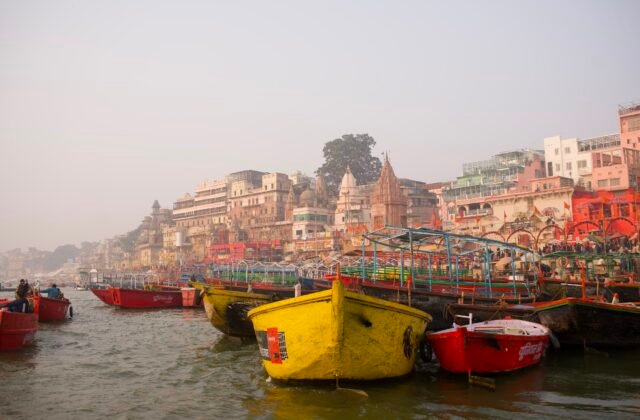
BlogMotor Boat Booking in Varanasi
Varanasi is the spiritual capital of India. It is known for its ancient temples and ghats, with a splash of a boat…
 Blog
BlogEvening Bajra Boat Booking: Front Row View of Ganga Aarti
Explore the spiritual allure and historic charm of Varanasi with our special evening bajra boat booking in Varanasi for your unique and…
 Blog
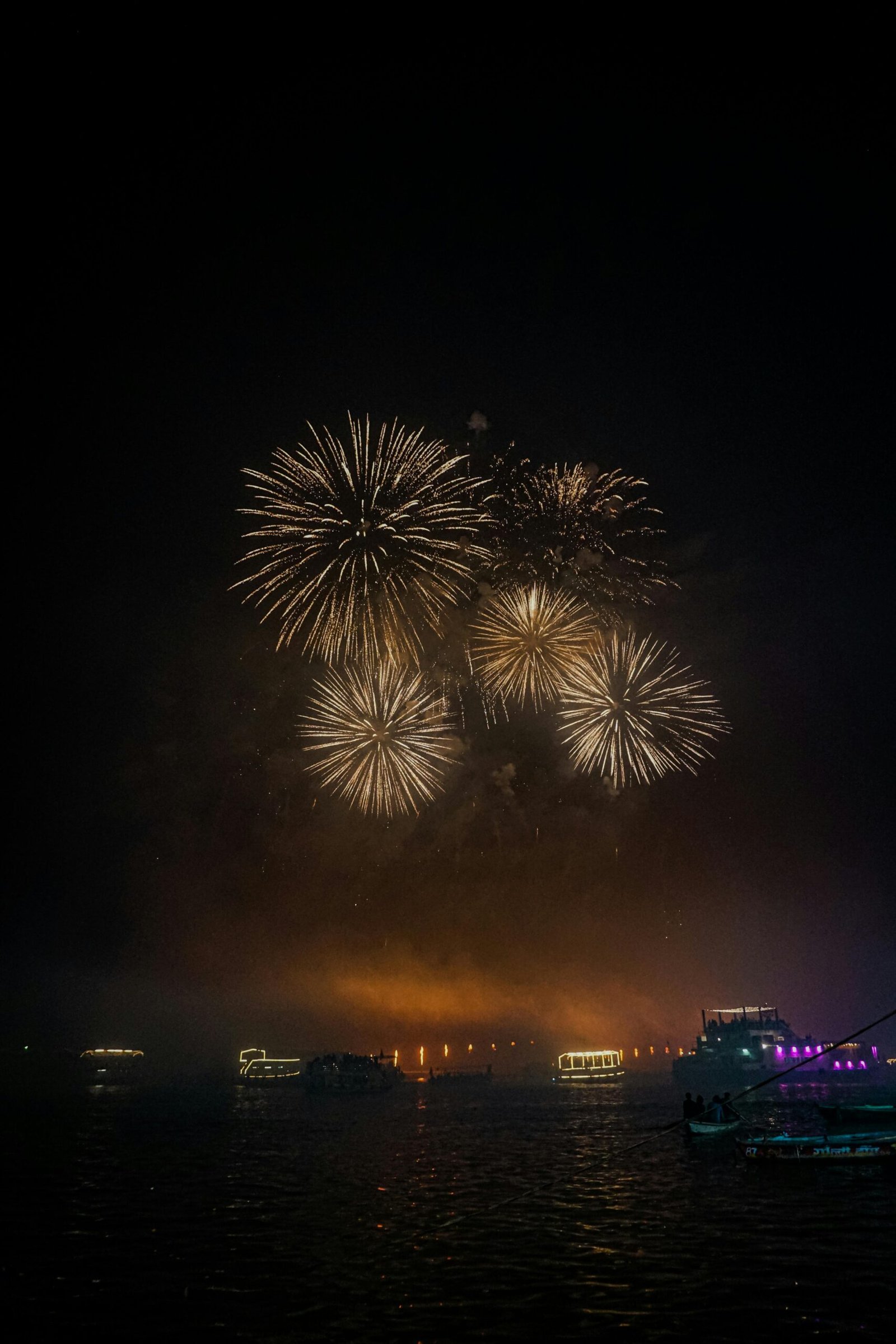
BlogDev Diwali Boat Booking Varanasi: Witness the Festival of Lights
Dev Diwali Boat Booking is one of the most required activities during the great celebration of Dev (God) Deepawali in Varanasi. Thousands…