
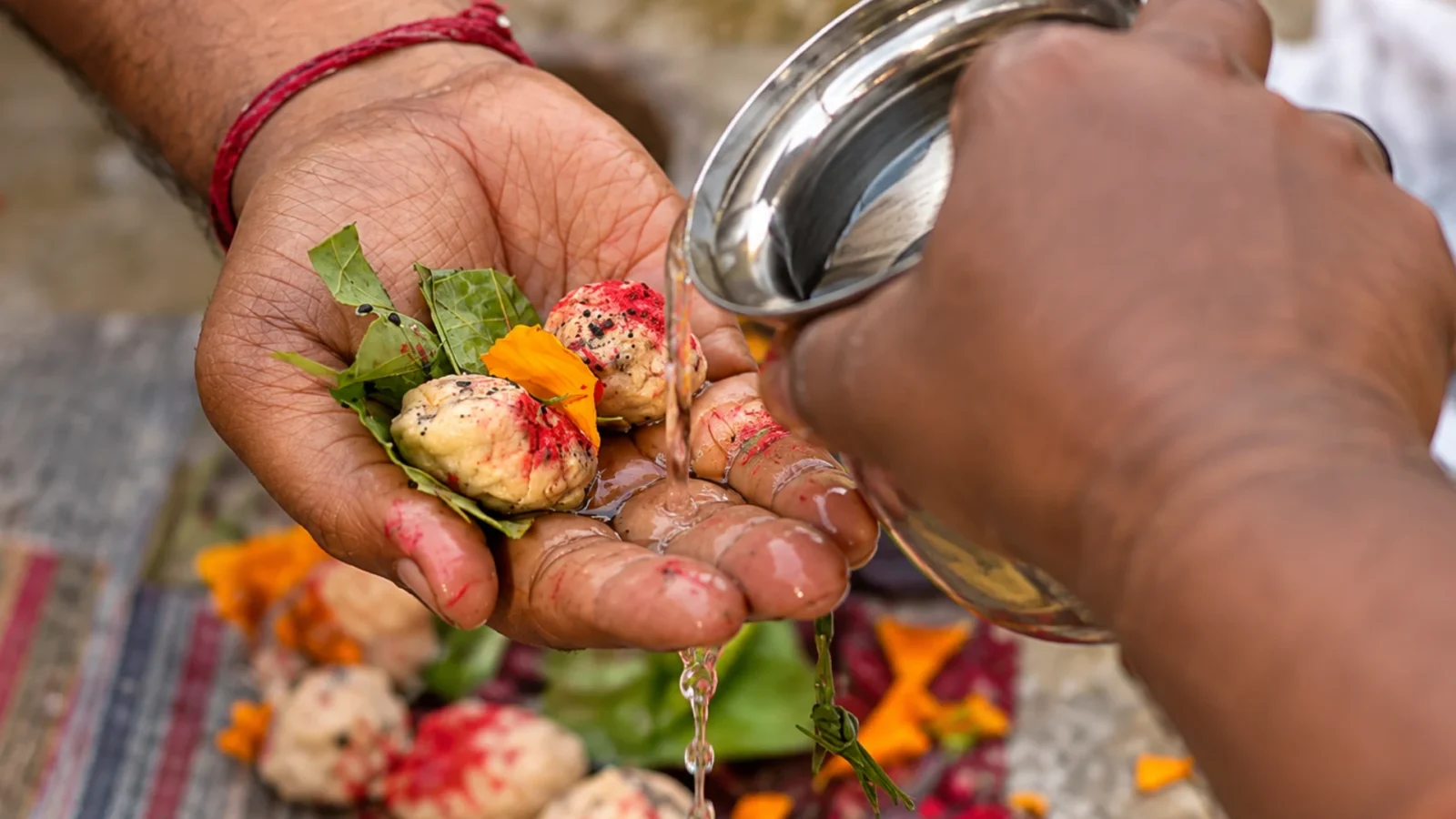
When someone in the family talks about performing a puja for their ancestors, the first question is often, “What exactly do we need to do?” Some people already know about these rituals because their parents or grandparents have followed them. Others start looking for information only after a priest recommends a particular ceremony. Tripindi Pooja is one such ritual that people ask about when planning ancestral rites in Kashi. Varanasi is very close to the heart of several Hindu families. It is a city where people come to pay homage at various temples, take a holy dip in the river Ganga, and conduct ceremonies. However, for someone who is visiting Kashi for the first time, conducting a puja can be slightly tricky. You do not have an idea about where you should go, what you should carry, and whom you should approach. If you are planning a Tripindi pooja in Varanasi, here are a few things to know before you make your travel plans.
What Is Tripindi Pooja?
Tripindi Pooja, also known in connection with Tripindi Shradh, is a Hindu ritual related to ancestral worship. Families may perform it according to their religious traditions or when a knowledgeable priest recommends it for their circumstances.
In most of the families in India, the remembrance of the ancestors is a part of their religion. They observe rituals like performing Shraddha and offering prayers to their departed loved ones.
One may have known about this ritual from their relatives who have been to Varanasi, or someone in their family may have advised them to check it out. However, one should first find out what the reason is behind such recommendations. It will be good if the priest can explain the purpose of this ritual without complicating the process. There is no need to know every mantra and every ritual process oneself. It is enough to get familiar with the basics and ask necessary questions.
Why Do Families Choose Varanasi for Tripindi Pooja?
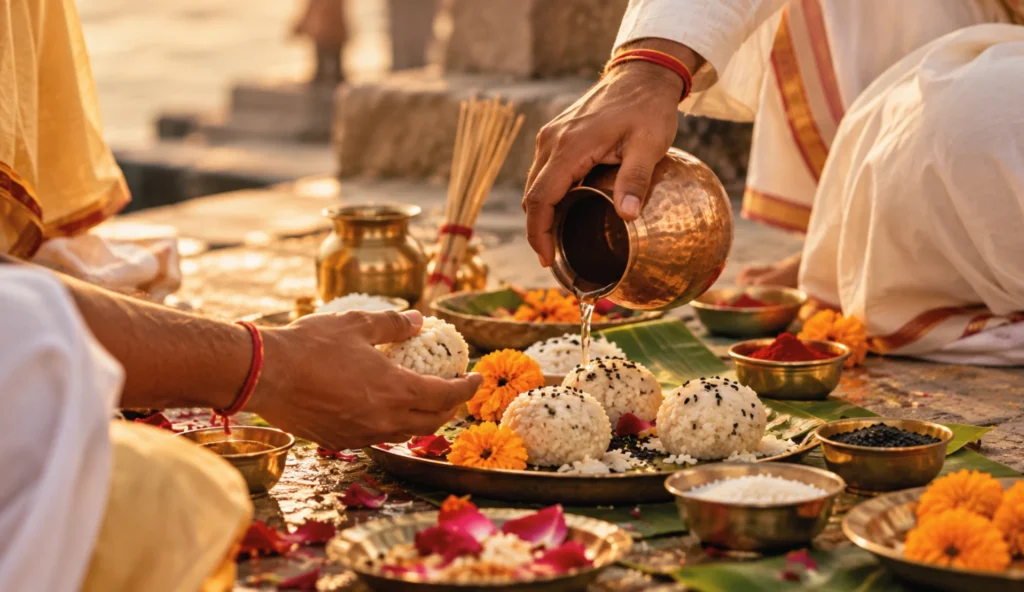
For many people, visiting Kashi is something they have thought about for a long time. Some come to seek blessings at Kashi Vishwanath Temple, while others visit to perform religious duties that are important to their families.
Ancestral rituals are another reason people travel to Varanasi. Pishach Mochan Kund is traditionally associated with Tripindi Shradh and other rites connected with ancestors.
If you are travelling from a different city, it helps to arrange the ceremony before arriving. Varanasi can be busy, particularly during important religious periods. Getting the ideal place and making the necessary preparations may be time-consuming, particularly when you are travelling along with your parents or other older relatives. Contact the priest or service provider for the exact place, the best date, and all other necessities. Small things like these will make your day easy.
Who Needs to Perform Tripindi Pooja?
It is not necessary for each individual or household to undertake this ritual. This all depends upon the traditions of the religion as well as advice from an experienced priest.
You may want to inquire about the ceremony if it has been recommended to you as part of ancestral rites or if your family follows a tradition of performing it.
One thing worth remembering is that you should not rush into a booking because somebody has frightened you with stories about bad luck or family problems. Ask what the puja involves and why it is being suggested. Take the time you need to make an informed decision.
Religious rituals are a personal matter. You should feel comfortable understanding the ceremony before agreeing to perform it.
What Is the Connection Between Tripindi Pooja and Pitra Dosh?
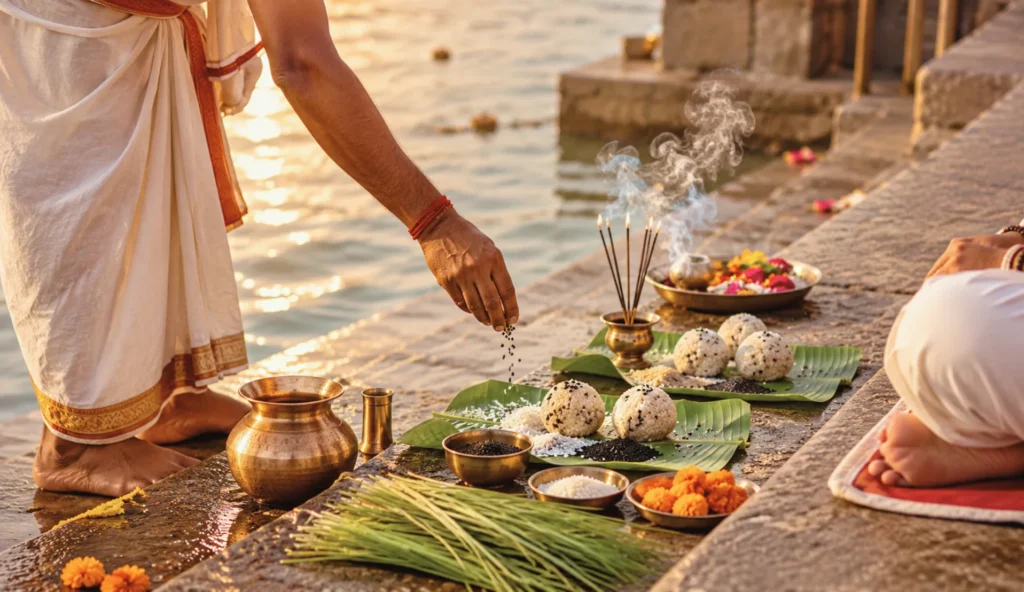
People searching online for pitra dosh puja in Varanasi are often trying to understand whether Tripindi Pooja is connected with Pitra Dosh. In Hindu Astrology and Religion, Pitra Dosh is related to ancestral issues. Certain priests might prescribe some rituals for ancestors based on their evaluation of the individual’s situation.
Tripindi Pooja may be recommended in certain traditional contexts. However, the advice can vary, so it is sensible to discuss your situation directly with a knowledgeable priest rather than relying only on something you have read online.
It is likely that you have heard the belief that Pitra Dosh is responsible for all the problems in life. One should be careful in believing these claims because problems such as financial troubles, health issues, and family disputes can arise due to various reasons, and it is not possible that a ritual will solve all the problems. Before conducting the puja, you must know the significance and process of the puja ceremony.
How Is Tripindi Pooja Performed?
If this is your first time attending the ceremony, you may be wondering whether any preparation is needed or if you should know about the process. Typically, the priest takes care of the process for you. The ceremony typically starts off with a sankalp wherein the religious purpose is declared. Then, the priest conducts the rituals and mantras as per the procedures and leads you in the offerings and other rituals that follow. There are small variations based on either the priest or the family customs. This is the reason why it is important to ask about the process beforehand rather than assume the process to be the same in all pujas.
You can also ask how long the ceremony is expected to take and whether any family members need to participate. If you are travelling with older relatives, allow enough time so nobody has to hurry through the experience.
What Should You Arrange Before the Puja?
This is one of the most practical things to check before travelling to Varanasi.
Some families prefer to arrange everything themselves. Others would rather have the priest or service provider organise the required materials. Both arrangements may be possible, depending on the service.
Common ritual items can include flowers, sesame seeds, kusha grass, fruits, and other offerings prescribed for the ceremony. The final list should come from the priest, as the requirements may differ.
Before confirming your booking, ask:
- Is the puja samagri included in the cost?
- Will we need to bring anything from home?
- Where will the ceremony take place?
- How much time should we allow?
- What is covered in the total cost?
What Are the Benefits of Tripindi Pooja?
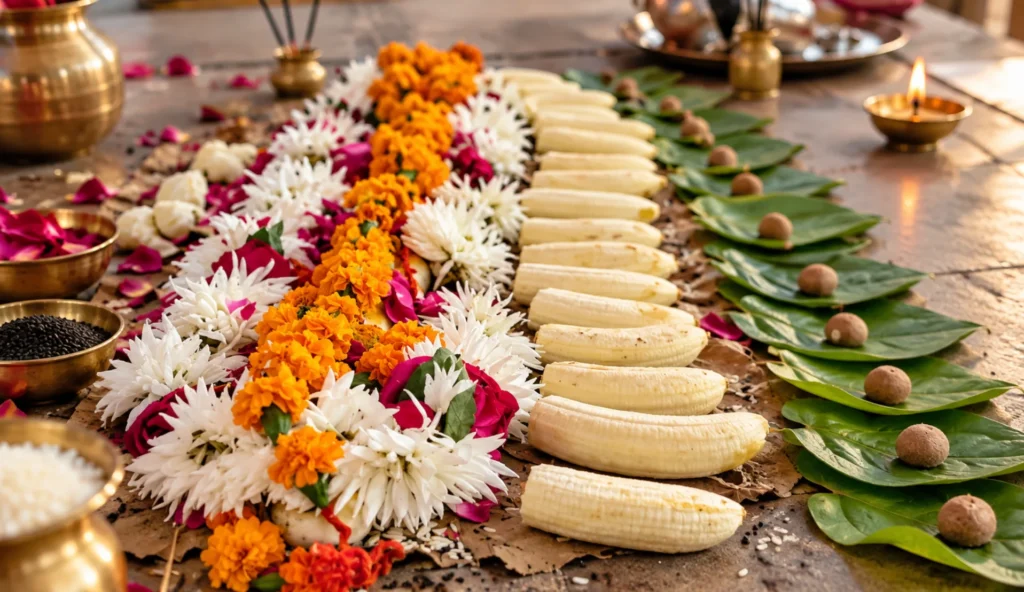
Tripindi Puja benefits are usually sought by people interested in learning the reasons for the importance of the ceremony.
In accordance with Hindu views, Tripindi Pooja implies paying respect to one’s ancestors and fulfilling one’s religious obligations to those deceased relatives. Those who practice this faith find it useful to commemorate the ancestors.
Consider the number of different family traditions that have been inherited from generation to generation. Some are performed annually, while some are related to certain occasions in one’s life. Ancestral ceremonies can be among those.
At the same time, the puja ceremony gives the chance for all family members to come together and conduct an important ceremony for them. The spiritual value of the ceremony depends on one’s belief and religious knowledge.
What is more important is that such traditions should not be regarded as sure outcomes of the ceremony. It is necessary to do something in accordance with one’s beliefs rather than receive a definite benefit in return.
When Is the Right Time to Perform Tripindi Pooja?
Pitru Paksha is a period when many Hindu families remember their ancestors and perform traditional rites. During these days, people may arrange Shraddha, Tarpan, and Pind Daan in Kashi according to their family customs.
This is also why people look for Pitru Paksha rituals in Varanasi when planning a visit to Kashi. However, Tripindi Pooja is not necessarily limited to Pitru Paksha. The appropriate date depends on the family’s circumstances, religious tradition, and the priest’s advice. If you have a specific month in mind, speak to the priest before booking your travel. This is particularly useful if you are coming from another state and need to coordinate train tickets, accommodation, and time off work.
Tripindi Pooja vs Pind Daan and Shraddha
These names can sound similar when you first start researching ancestral rituals, but they do not all refer to the same ceremony.
| Ritual | What it generally involves |
| Tripindi Pooja | A specific ritual associated with ancestral worship |
| Pind Daan | Offerings of pindas as part of traditional ancestral rites |
| Shraddha | Religious observances performed to honour departed ancestors |
If you have been advised to perform Tripindi Pooja, do not automatically substitute another ritual because it sounds familiar. Ask the priest to explain the difference and whether any additional ceremony is appropriate for your circumstances.
How to Book Tripindi Pooja in Varanasi
Once you understand the ritual, the next step is finding someone who can help you arrange it. Tripindi Puja services in Varanasi may prove beneficial if you are a first-time visitor or traveling from distant places. But do not decide based on the prices alone. Always know what you are paying for. First of all, state your preferred day and ask if there is a priest available. Get confirmation about the place where the ceremony will take place, the samagri arrangement, time of the ceremony, and other charges, if any. Any confusion should be clarified before you pay for it. Banaras Bhraman provides an initial point of contact for the Tripindi Puja arrangement in Kashi. Its Tripindi Puja in Kashi web page will assist you in discussing your needs.
Conclusion
Planning an ancestral ritual is a personal decision. For some families, it means continuing a tradition followed by their parents and grandparents, while others may be learning about it for the first time. If you are planning to undertake Tripindi Pooja in Varanasi, take your time to understand the rituals and make the necessary arrangements before your visit.
People come to Kashi for many reasons, but performing a puja for their ancestors often holds a deeper meaning than an ordinary trip. It is a way to honour family traditions and follow the religious beliefs that have been passed down through generations. If you need help planning your visit, Banaras Bhraman can help you inquire about Tripindi Puja arrangements in Varanasi, making it easier to prepare for your spiritual journey to Kashi.
Keep reading
 Blog
Luxury Boat Experience for Dev Diwali
If you have ever visited Varanasi during Dev Diwali, you probably know how difficult it is to describe the evening in a…
 Blog
Motor Boat Booking in Varanasi
Varanasi is the spiritual capital of India. It is known for its ancient temples and ghats, with a splash of a boat…
 Blog
Evening Bajra Boat Booking: Front Row View of Ganga Aarti
Explore the spiritual allure and historic charm of Varanasi with our special evening bajra boat booking in Varanasi for your unique and…